A liver injury does not automatically require an operation: the urgent question is whether the patient is losing blood or developing another abdominal injury. By the end, you will know which warning signs require an emergency department, how doctors judge severity, when monitoring or embolisation is safer than surgery, and what hospital capabilities to verify in Pune.
Key takeaways
- Go to emergency care for fainting, severe abdominal pain, rapid pulse or worsening weakness.
- Contrast CT shows bleeding, liver damage and associated injuries in stable patients.
- Stable injuries often need monitoring, repeat tests and CT rather than open surgery.
- Surgery becomes urgent with uncontrolled bleeding, shock or injuries needing repair.
Which liver-injury symptoms require immediate hospital treatment?
After a motor-vehicle crash, fall, sports impact, rib fracture or penetrating wound, treat these symptoms as a possible liver bleed. Do not wait for an appointment with a liver injury doctor: go to an emergency department or call emergency services.
| Warning sign | Why it matters | What to do |
|---|---|---|
| Fainting or near-fainting | Falling blood pressure can reduce brain blood flow | Lie flat and call emergency services |
| Confusion, unusual sleepiness or weakness | Shock may be affecting the brain | Keep the person still and monitored |
| Cold, pale or clammy skin | The body is redirecting blood from the skin | Cover lightly; do not overheat |
| Rapid pulse, especially with dizziness | The heart may be compensating for blood loss | Report the pulse and symptoms to rescuers |
| Severe or increasing abdominal pain | Bleeding or organ damage may be progressing | Avoid food, drink and painkillers such as ibuprofen |
| Abdominal swelling or firmness | Blood can collect inside the abdomen | Do not press on the abdomen |
| Vomiting blood | The injury may involve the upper digestive tract | Turn the person onto their side if vomiting |
| Worsening right-shoulder pain | Irritation beneath the diaphragm can refer pain to the shoulder | Seek emergency treatment immediately |
Do not remove an embedded object or probe a wound. Apply gentle pressure around, not through, a penetrating wound, and tell clinicians exactly when and how the injury occurred. A specialist’s advice comes after emergency circulation assessment, not before it.
How do doctors determine the severity of a liver injury?
Circulation comes first: doctors track blood pressure, pulse, skin temperature, mental alertness and response to intravenous fluids or blood. A falling pressure, rising pulse or confusion suggests ongoing blood loss. They repeat haemoglobin testing to detect bleeding over time and check liver-function tests for associated liver damage.
A FAST ultrasound can quickly show free fluid in the abdomen, but it cannot reliably grade the liver injury or exclude significant bleeding. If you are stable or stabilised, contrast-enhanced CT is the key examination. It can show:
- The depth and location of liver damage
- Active contrast extravasation, called a blush
- Haemoperitoneum, or blood within the abdominal cavity
- A hepatic-artery pseudoaneurysm
- Injuries to other organs
The American Association for the Surgery of Trauma (AAST) scale describes anatomical severity:
- Grade I: minor capsular or shallow parenchymal injury
- Grade II: a larger haematoma or laceration
- Grade III: deeper or more extensive damage
- Grade IV: major disruption of a liver section
- Grade V: severe vascular injury or extensive disruption
The grade helps predict anatomical damage, not the treatment by itself. A stable patient with grade IV injury may avoid surgery, while a patient with grade II injury and worsening circulation may need embolisation or an operation. A liver injury specialist in Pune should interpret the grade alongside bleeding, vital-sign trends and associated injuries.
When can liver trauma be treated without open surgery?
A stable blood pressure and pulse trend, a responsive patient, and no peritonitis usually support treatment without open surgery. The AAST CT grade helps describe damage, but physiology, bleeding and associated injuries decide the next step.
| Option | What it involves | When it applies |
|---|---|---|
| Monitored non-operative care | ICU or high-dependency observation, repeated examinations, haemoglobin tests and blood availability | Stable or stabilised blunt injury without uncontrolled bleeding or another injury needing laparotomy |
| Angiographic embolisation | Catheter angiography followed by selective hepatic-artery embolisation | Stable patient with arterial contrast extravasation, a pseudoaneurysm or continuing focal haemorrhage |
| Open exploration | Emergency laparotomy with bleeding control and damage-control techniques | Shock that persists despite resuscitation, peritonitis, suspected bowel perforation or another operative injury |
A high-grade liver injury can still heal without liver surgery when the patient remains stable and bleeding is controlled. Active bleeding on CT does not automatically require an open operation; embolisation is often the less invasive way to stop it. Ongoing haemorrhage after embolisation can require repeat embolisation or surgery.
Non-operative liver trauma treatment in Pune requires a hospital that can provide:
- 24-hour trauma surgery and an operating team
- Blood-bank support and rapid blood-product release
- Contrast CT and intensive-care monitoring
- Interventional radiology capable of hepatic embolisation
- Immediate damage-control laparotomy if the patient deteriorates
Rib fractures, head injury, bowel injury or pelvic bleeding can change the plan even with a favourable liver grade. Children also need age, physiology, associated injuries and trauma-centre capability considered rather than an adult threshold applied mechanically.
When does liver trauma surgery become necessary?
Persistent shock after initial resuscitation is the clearest trigger for urgent laparotomy. Diffuse peritonitis, suspected bowel perforation, or another abdominal injury requiring exploration is also a reason to operate, regardless of the AAST liver-injury grade.
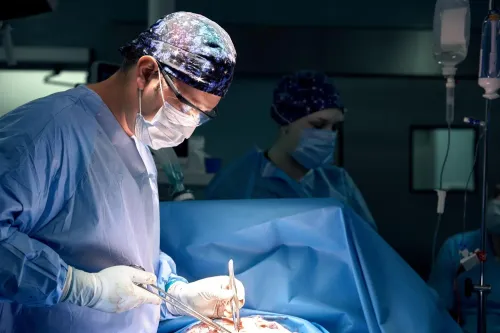
1. Control the immediate threat. The surgical team opens the abdomen to find and stop major bleeding, repair contamination sources, and assess associated injuries. In an unstable patient, liver trauma surgery is usually damage-control surgery, not an attempt to complete a complex reconstruction.
2. Pack the liver. Surgeons place abdominal packs firmly around bleeding surfaces to provide pressure, then use a temporary abdominal closure when swelling or ongoing resuscitation makes definitive closure unsafe. The patient goes to intensive care for warming, clotting-factor replacement and correction of acidosis before planned re-exploration.
3. Use the Pringle manoeuvre when appropriate. Temporary clamping of the portal triad reduces bleeding from the hepatic artery and portal vein. If haemorrhage continues despite the clamp, the source may be a hepatic vein or retrohepatic inferior vena cava, requiring advanced packing or specialist vascular control.
A stable patient with active arterial bleeding on contrast CT may receive selective hepatic-artery embolisation instead of open surgery. Major liver resection is rarely the first emergency step because it costs blood, time and functioning liver tissue; surgeons reserve it for selected injuries after immediate haemorrhage control.
How should you choose trauma care and follow-up in Pune?
Non-operative treatment is safe only where deterioration can trigger treatment within minutes. Before relying on observation, ask whether the receiving hospital has these capabilities:
| Capability | Why it matters | What to verify |
|---|---|---|
| 24-hour emergency and trauma surgery | Uncontrolled bleeding may require laparotomy | An on-call operating team, not only elective surgery |
| Blood bank and ICU | Shock may require rapid transfusion and organ support | Immediate access to packed red cells, plasma and intensive monitoring |
| Contrast-enhanced CT | Detects bleeding and associated injuries | CT available at all hours, with urgent radiology reporting |
| Interventional radiology | Selected arterial bleeding may need hepatic embolisation | A team able to perform emergency angiography and embolisation |
| Serial assessment | A stable examination can change | Repeat examinations, haemoglobin tests and blood-pressure monitoring |
This is coordinated care: emergency clinicians resuscitate and triage, radiologists interpret CT, interventional radiologists embolise selected arterial bleeds, and trauma or hepatobiliary surgeons operate when physiology or associated injuries demand it. Go to an emergency department after significant trauma; do not start with an outpatient search for a liver injury doctor.
A liver injury surgeon in Pune or liver injury specialist in Pune should help you identify a centre with this complete pathway. Dr. Mahesh Thombare Surgical Gastroenterologist is relevant for specialist surgical assessment, but an elective hepatobiliary practice alone does not prove emergency trauma capability.
After discharge, seek urgent reassessment for:
- New or worsening abdominal pain, swelling, faintness, confusion or falling blood pressure
- Fever, jaundice, vomiting or worsening right-shoulder pain
- Symptoms suggesting rebleeding, bile leak, biloma, abscess or hepatic-artery pseudoaneurysm
Do not wait for a routine follow-up appointment.
Related service
Hepato Pabcreato Biliary Surgery Liver trauma refers to any injury or damage to the liver caused by an external force or trauma. View service → |
Frequently asked questions
Which liver-injury symptoms require immediate hospital treatment?
After a crash, fall, blow or penetrating wound, seek emergency care for fainting, confusion, pale or clammy skin, severe or increasing abdominal pain, abdominal swelling, shoulder pain, rapid pulse, breathlessness or worsening weakness. These signs can indicate internal bleeding.
How do doctors determine the severity of a liver injury?
Doctors assess blood pressure, pulse, mental status and signs of shock, then use blood tests such as haemoglobin and liver enzymes. A contrast-enhanced CT scan in a stable patient shows the injury grade, active bleeding, fluid in the abdomen and other organ damage.
When can liver trauma be treated without open surgery?
Non-operative treatment fits a patient who remains haemodynamically stable and has no other injury requiring surgery. Care includes hospital observation, repeated examinations, haemoglobin checks and CT follow-up when indicated. Angiographic embolisation can stop arterial bleeding without an open operation.
When does liver trauma surgery become necessary?
Surgery is considered when bleeding remains uncontrolled, the patient is unstable despite resuscitation, embolisation cannot control bleeding, or another abdominal injury needs repair. The operation may involve packing, repairing liver injuries or removing damaged tissue.
Keywords