Persistent pain under the right ribs with fever, vomiting, jaundice or marked tenderness needs hospital assessment, not an appointment for routine gallbladder care. You will learn how clinicians confirm acute cholecystitis, identify bile-duct obstruction, stabilise you and decide whether early surgery, drainage or another treatment is safest.
Key takeaways
- Seek emergency care for severe pain, fever, vomiting, jaundice, confusion or faintness.
- Ultrasound and blood tests help confirm inflammation and identify complications.
- Hospital treatment includes fluids, pain relief, antibiotics and surgical assessment.
- Early laparoscopic gallbladder removal usually prevents recurrent attacks and complications.
When right-upper-abdominal pain needs emergency care
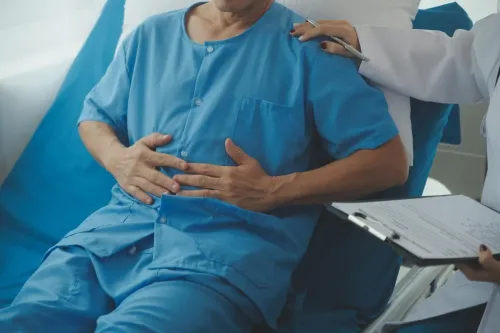
Persistent or severe right-upper-abdominal pain needs emergency assessment when it lasts beyond a few hours, returns repeatedly, or prevents normal movement, eating or drinking. Go directly to an emergency department if it occurs with fever, repeated vomiting, yellow skin or eyes, confusion, faintness, cold clammy skin, or low blood pressure.
These signs can indicate gallbladder infection, bile-duct obstruction or sepsis.
| Pattern | More likely meaning | What to do |
|---|---|---|
| Biliary colic | Cramping after a fatty meal that settles within several hours, without fever or jaundice | Arrange prompt medical review; do not assume it is harmless if episodes recur |
| Acute cholecystitis | Persistent right-upper-quadrant pain, tenderness or a positive Murphy sign, plus fever or raised inflammatory markers | Seek same-day hospital assessment |
| Cholangitis | Pain with jaundice and fever or chills; confusion or low blood pressure signals severe illness | Call emergency services or attend the emergency department immediately |
| Pancreatitis | Severe upper-abdominal pain, often spreading to the back, with vomiting | Seek urgent assessment rather than waiting for gallbladder care |
Acute cholecystitis treatment in Pune should start with confirmation that inflammation is present, not merely gallstones or indigestion. Tokyo criteria require a local sign, a systemic inflammatory finding and characteristic imaging; one symptom alone is not diagnostic.
Do not wait for an outpatient appointment when pain is persistent or you have jaundice, confusion, dehydration or vomiting.
How doctors confirm the diagnosis and find complications
A positive Murphy sign alone does not prove acute cholecystitis. The doctor looks for right-upper-quadrant tenderness or pain during inspiration, fever, tachycardia, jaundice and signs of sepsis. Tokyo diagnostic criteria require all three: a local sign, systemic inflammation and characteristic imaging. This helps separate it from biliary colic, pancreatitis, cholangitis, ulcer disease and hepatitis.
For acute gallbladder inflammation treatment in Pune, the confirmation process usually includes:
- Examination: right-upper-quadrant tenderness, an inspiratory pause with pressure under the ribs (Murphy sign), abdominal guarding, fever, low blood pressure or confusion.
- Blood tests: complete blood count for raised white cells, C-reactive protein for inflammation, and liver-function tests including bilirubin, alanine aminotransferase and alkaline phosphatase. Lipase is added when pancreatitis is possible.
- Imaging: right-upper-quadrant ultrasound usually comes first. Gallstones, a thickened gallbladder wall, an enlarged gallbladder, surrounding fluid or a sonographic Murphy sign support the diagnosis.
Ultrasound also checks the common bile duct for a visible stone or widening, but bowel gas or obesity can hide an obstruction. If jaundice, raised bilirubin or alkaline phosphatase, duct dilation, or severe infection points to a duct stone, magnetic resonance cholangiopancreatography or endoscopic ultrasound provides a closer view.
ERCP is reserved mainly for a confirmed or strongly suspected obstruction because it can remove the stone and drain infected bile, but it carries procedural risks. Contrast CT is useful when perforation, abscess, gangrene or another abdominal diagnosis is suspected.
What happens in hospital before an operation
Severe pain, repeated vomiting, fever or low blood pressure calls for hospital treatment, not an outpatient appointment. For anyone seeking acute cholecystitis treatment in Pune, the hospital should provide resuscitation, blood tests, ultrasound and a same-admission plan for surgery or drainage.
1. You will usually stop eating and drinking while the team assesses you. An intravenous cannula allows fluids and electrolytes to correct dehydration; nurses monitor blood pressure, pulse, urine output, temperature and oxygen levels.
Persistent vomiting is treated with an antiemetic such as ondansetron, while paracetamol, an anti-inflammatory drug or carefully dosed opioid relieves pain according to your kidney function, ulcer history and condition.
2. Doctors start intravenous antibiotics when infection is suspected, especially with fever, raised inflammatory markers, sepsis or complicated inflammation. The choice depends on illness severity, allergy history, kidney function, whether the infection began in hospital and local resistance patterns.
Broad-spectrum antibiotics are not automatically superior, and treatment is reviewed when cultures and clinical response provide more information.
3. Jaundice, dark urine, abnormal bilirubin or bile-duct enlargement raises concern for a common bile-duct stone. The team may arrange magnetic resonance cholangiopancreatography or endoscopic ultrasound; urgent endoscopic retrograde cholangiopancreatography removes a blocking stone when cholangitis or persistent obstruction is present.
This acute gallbladder inflammation treatment in Pune should lead promptly to laparoscopic surgery when you are fit, because antibiotics alone do not remove the infected source. If surgery is unsafe, percutaneous gallbladder drainage can stabilise you.
Why early laparoscopic cholecystectomy is usually definitive treatment
For a patient fit for anaesthesia, early laparoscopic cholecystectomy is usually definitive treatment. It removes the inflamed gallbladder and prevents another attack rather than postponing surgery for weeks.
NICE recommends operation within one week of diagnosis; WSES advises surgery as soon as possible, within seven days of admission and ten days of symptom onset when feasible. For an acute cholecystitis operation in Pune, ask whether same-admission surgery is available.
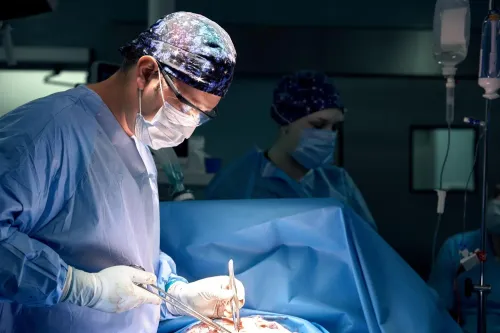
Under general anaesthesia, the surgeon places a camera and instruments through small abdominal incisions, separates the gallbladder, clips and divides the cystic duct and artery, then removes the gallbladder. Before cutting, the surgeon must obtain the critical view of safety, clearly identifying the cystic duct, cystic artery and liver behind them.
When swelling, bleeding or scarring hides the anatomy, safer options include:
- Subtotal cholecystectomy, leaving part of the gallbladder rather than injuring the bile duct.
- Fundus-first dissection, approaching from the top when the neck is unsafe.
- Intraoperative imaging, such as cholangiography, to clarify the ducts.
- Conversion to open surgery through a larger incision when laparoscopic dissection is hazardous. This is a safety decision, not an operative failure.
Percutaneous cholecystostomy suits patients with persistent shock, severe organ dysfunction or prohibitive anaesthetic risk. It drains infection as a bridge or alternative, but the tube can dislodge or become infected, and later gallbladder surgery is often still needed. Antibiotics do not replace source control; after uncomplicated removal, routine postoperative antibiotics are not recommended.
How to choose urgent biliary care in Pune
Choose a hospital that can complete assessment and treatment during the same admission, not merely schedule an elective appointment. Ask whether it provides 24-hour ultrasound, blood testing, anaesthesia, operating-room access and monitored resuscitation for patients with sepsis, dehydration or low blood pressure.
Before travelling, confirm these points:
- The acute cholecystitis surgeon in Pune performs emergency laparoscopic cholecystectomy and can explain when subtotal surgery, open conversion, fundus-first dissection or drainage is safer.
- The team uses the critical view of safety before clipping the cystic duct and artery.
- Therapeutic ERCP is available for a common-bile-duct stone or cholangitis, either on site or through a defined transfer pathway.
- Intensive care and interventional radiology are accessible if organ failure develops or a gallbladder drain is needed.
- The hospital reviews antibiotics against illness severity, kidney function, allergies, cultures and local resistance patterns.
| Setting | Suitable use | Risk if unavailable |
|---|---|---|
| Emergency-capable hospital | Same-admission imaging, stabilisation and surgery | Delayed treatment or unsafe transfer |
| Elective clinic | Follow-up after recovery or planned review | Cannot manage sepsis, obstruction or sudden deterioration |
| Hospital with ERCP access | Jaundice, cholangitis or suspected bile-duct stone | Persistent obstruction if endoscopy is delayed |
For patients fit for surgery, ask whether the acute cholecystitis operation in Pune can occur during this admission; guidelines favour surgery within seven days of admission when feasible. Dr. Mahesh Thombare Surgical Gastroenterologist is one local option to assess against these emergency capabilities, not just laparoscopic availability.
Related services
Gallbladder Surgery in Aundh, Pune Gallbladder Surgery in Aundh, Pune Gallbladder Surgeon in Aundh, Pune – Dr. Mahesh Thombre Gallbladder surgery is a commonly performed surgical procedure to treat gallstones,... |
Hepato Pabcreato Biliary Surgery Acute cholecystitis is a condition characterized by inflammation of the gallbladder, usually caused by the obstruction of the cystic duct, which is... View service → |
Frequently asked questions
When does right-upper-abdominal pain need emergency care?
Seek emergency care when pain lasts more than a few hours, keeps returning, or stops you from moving, eating or drinking. Go immediately for fever, repeated vomiting, jaundice, confusion, faintness, cold clammy skin or low blood pressure.
How do doctors confirm acute cholecystitis?
Doctors use your symptoms and examination alongside blood tests and abdominal ultrasound. Additional CT or magnetic resonance cholangiopancreatography can help assess complications or bile-duct stones.
What happens in hospital before acute cholecystitis surgery?
Treatment usually includes fasting, intravenous fluids, pain relief, anti-nausea medicine and antibiotics when infection is suspected. A surgical team then assesses your fitness and timing for gallbladder removal.
Why is early laparoscopic cholecystectomy usually definitive treatment?
Laparoscopic cholecystectomy removes the inflamed gallbladder and prevents further gallstone attacks. Early surgery can also reduce the risk of worsening inflammation and other complications when you are fit for the procedure.
Related services
Laparoscopic Surgery & Gastrointestinal Oncosurgery in Aundh, Pune Laparoscopic Surgery & Gastrointestinal Oncosurgery in Aundh, Pune Laparoscopic Surgery in Aundh, Pune – Dr. Mahesh Thombre Laparoscopic surgery is an advanced minimally invasive surgical technique used to diagnose... |
HPB Surgery in Aundh, Pune HPB Surgery in Aundh, Pune Dr. Mahesh Thombre HPB (Hepato-Pancreato-Biliary) Surgery in Aundh, Pune HPB Surgery, also known as Hepato-Pancreato-Biliary Surgery, is a... |
Keywords